
Contemporary news
BOKO HARAM IN ABIA STATE: 87 of the people arrested in Abia State have been confirmed as terrorists.
 About 87 of the over 486 travellers arrested in Abia State have been identified as members of the insurgent Boko Haram group, a security source told PREMIUM TIMES.
The midnight travelers were arrested on Monday in Aba, along Enugu – Port Harcourt Expressway, while traveling from Northern Nigeria to Port Harcourt in several buses.
The Director of Defence Information, Chris Olukolade, had, in a statement on Tuesday, said a wanted Boko Haram suspect was identified during the screening of those arrested. He, however, did not name the suspect.
Mr. Olukolade also stated that those identified as possible security risks or illegal immigrants would be separated from their colleagues for further action.
A top security source, however, told PREMIUM TIMES, Thursday, that apart from the one earlier identified, 86 others have been identified as suspected terrorists.
“But to be double sure, we have called for additional screening,” he said.
He confirmed that the suspects were all headed to Port Harcourt when they were arrested. He said that most of them, however, had never been to Port Harcourt before now and some did not even have up to N1,000 on them.
He stated that although no weapons were discovered on them, a certain kind of body marks associated with terrorists was noted on them.
He disclosed that the suspects were being held at 144 Battalion, close to Umuahia in Abia State although the confirmed kingpin has been moved to a different location.
He, however, refused to disclose the name of the confirmed kingpin, saying it could jeopardise investigations, as some persons linked to him might try to escape from the country if his name was mentioned.
“The kingpin is making very useful statements. Initially, he was trying to deceive the interrogators until he was confronted with fresh info,” the source said.
The arrest of the travelers was the first major one of suspected Boko Haram insurgents by security officials in eastern part of Nigeria.
Boko Haram has killed thousands of people since its insurgency began in 2009 and its activities had been limited to Northern Nigeria leading to the declaration of a State of Emergency in Borno, Yobe, and Adamawa. The sect, however, recently threatened to attack other parts of the country.
A social media commentator had warned that: “The next bomb in Nigeria might land in the eastern part of the country.”
The people of Eastern Nigeria are advised to report every strange movements in their vicinity by any strange individual. “Stay alert, it is important you know that your land has invaded by blood thirsty killers and so you must at all times watch out for strangers. Don’t give them the chance to hit on us.” His Royal Highness, Eze Nwosu advised his community against the invasion of eastern Nigeria by members of Boko Haram.
ONE BIG QUESTION: WHO IS AN AFRICAN? WHAT YOU SHOULD HAVE KNOWN BEFORE YOU SAY YOU’RE AFRICAN.
 Sserubiri Africa Uhuru – A proper definition of any people must relate them to their ancestral land, their culture and their history. The central factor in the formation of identity is the interaction of people with their environment, especially an interaction with their land, which produces culture. At the very basis of culture are commonly held values that historically arose from the interaction between people and their ancestral land.
A people’s history is their story, the record of what they did and how they did what they did. The combination of all of these factors produces identity, which is the primary marker of origin, belonging and distinctiveness and the major factor in the proper orientation of a people in the world. An Afrikan is therefore a person who shares with others a common geographical origin and ownership of, and spiritual attachment to their ancestral land known as the continent of Afrika, certain physical characteristics, a common history, a common set of cultural values and consequently a common worldview, a common heritage and common economic, political and social interests. These core characteristics which amount to a specific identity set Afrikans apart from other peoples.
The search for an African identity began with Pan Africanism, a movement, which spread out to take different forms. The young generation, and perhaps the rural population of Africa might conceptually know little about the upsurge of the movements for promoting Pan Africanism, African personality, African Humanism, Ujamaa, Negritude, Consciencism, etc. Different disciplines, such as African Theology, African philosophy, African History, African literature, African art, to mention only a few of them, are a historical product of the search for an “African identity”, and are related to Pan Africanism. Communal and personal developments in Africa are threatened. Greed for wealth and misuse of power, individualism and so forth, could become the death-knell of our African values and identity.
The content call by African leaders that Africans ought to strive after creating a society that respects its cultural values has been heard many a time. To be able to do this, Africans must first discover themselves so as to be able to venture into the future as a respected people. Africans find themselves in turmoil, and a painful one for that matter. Africans are searching for a future, based on their traditions, but one which at the same time is open to changes and to a new worldview. The African of today is a modern person and feels the full impact, if not the blast, of modern civilization. Many Africans are torn- apart; in some sense, they are “falling apart.” The sense of being double, a split personality, of being half, is felt by many Africans who are influenced by such dualities as; two cultures, two value- systems and two worldviews, African and the Western.
The Pan- African Movement sought to find African roots and to restore African dignity and identity, which had protractedly been shattered during the slave trade and the colonial period. The different movements for promoting African socialism, African Humanism, Negritude, Black Consciousness, Ujamaa, etc. definitely have some of their roots in Pan Africanism. They form part of the inevitable search for an African identity and orientation, that earlier had been emphasized by different African leaders.
The drums and the death toll of African traditions, and African identity can be heard at a distance; hence one another have courageously declared “the death of African tradition.” Any meaningful talk about inculturation, Africanization or indigenization must, and should consider the African identity and worldview seriously, for though history has passed we can learn from it. African traditions convey certain values and some of these values could be useful for modern Africa.
The search for Africa’s contribution to world civilization has had a strong impact upon the academic and religious fields. The different disciplines which have cropped up, such as; African History, African literature, African Art, African philosophy and African Theology, to mention just a few, clearly underline the point. Such attempts need to be understood within historical contexts; the pre-independence period in Africa made it necessary to have hopes and aspirations which were in a sense expressed in the movements for promoting African Socialism, Negritude, etc.
At stake here is the survival of African values and identity. Some Africans are running away from themselves and their traditional past. This has been caused by the rapid intervention of some aspects of western culture i.e. cultural imperialism. Many Africans today believe that the Western value system and world- view are of universal validity, which, as such, must be applicable also to Africa. Many believe that Africans can catch up, and be like people of the “developed” countries. Such mental enslavement is the worst side effect of colonialism and of the uninculturated missionary activity.
A conscious corrective endeavor is required because; whilst it is necessary for us to tell Westerners to develop a less self- centered view of the world, which inevitably places them in an undue position of superiority, we Africans must struggle to come out of our negative ethnocentrism. During the period of the slave trade, colonialism and missionary activity, as well as in the earlier post- independence era, terms like; ‘savage’, ‘pagan’, ‘native’, ‘primitive’, ’tribe’, ’uncivilized’, ’underdeveloped’ were introduced and used in references above all, to Africa and Africans. Such terms, even if they might have had neutral connotation or meaning, are today regarded as being emotionally loaded and as implying a value judgment.
Today, the African continent finds itself in a challenging and critical situation. Pan Africanism, the OAU, African socialism, sensitivity to African personality, African Humanism, Ujamaa, Negritude, Consciencism, and such like, have lost something of their initial pertinence and thrust. Some Africans tend to identify themselves with their ethnic roots, others with their nations, a few with the African continent, others with their political parties, and others with ‘religious belongingness’. Many Africans get confused, when it comes to the question of loyalty; should one be loyal to the state, to the ethnic group, to African traditions, to the family, to a partial form of religion, to ‘modernism’ or to oneself?
Who is an African?
As the cradle of life and the starting journey of humanity everyone can claim to be African. Even the racist Apartheid architects called themselves and their language Afrikaan while they oppressed the black South Africans. The Arab countries of North Africa are full members of the various African continental and regional organizations, while they create exclusive, only Arab Organizations like the UMA (Union of the Maghreb Arab establishment in 1990). What about the Asians of East Africa? To what extent do the Europeans of southern Africa, the Arabs of North Africa and the Asians of East Africa feel African like the black Africans of the continent and in Diaspora do? The answer to this question differs according to which perspective one wants to underline. Some would claim that an African is a person born in or originating from Africa. Others would trace the Africa’s history to the distant past, including the era of slavery and colonialism. Others would see their Africannes in their ethnic and cultural roots; as Igbo, Akan, Ashanti, Galla, Gikuyu, Gandi, and so on.
People define themselves in terms of ancestry, religion, language, history, values, customs, and institutions. They identify with cultural groups: tribes, ethnic groups, religious communities, nations, and, at the broadest level, civilizations. … In coping with identity crisis, what counts for people are blood and belief, faith and family. People rally to those with similar ancestry, religion, language, values, and institutions and distance themselves from those with different ones.
As a first step out of that costly error, we must Afrocentrically limit the African identity to those from Africa who have, over the centuries, been singled out as targets for enslavement by the black color of our skins. Hence, whites, European as well as Arab–the very predators who decided to target blacks for racialised chattel enslavement– cannot be legitimately included with us, their prey, just because they‘ve forcibly made themselves our neighbors on the African landmass.
By the Africans, Pan Africanism can legitimately mean only the members of the indigenous populations of Africa who were, for the last 20 centuries, targeted for enslavement by Arabs and Europeans on account of their black skin color. That is the fundamental historical factor. Anybody who is not a biological descendant of these blacks cannot qualify as an African. Perhaps we could make our usage sufficiently distinctive by reserving the term Afrikaan for such indigenous populations and their descendants – until we adopt a name for ourselves from an Afrikan language. In which case, we are interested in Afrikans and after that in Afrika their homeland, and not first in Africa, the continent, and then in Africans those populations of any race whatever that are now located in the African continent, whether black or white, indigenous our exogenous, imperialist predators or their prey. Pan Africanism must therefore, with Black Consciousness rigor, limit its constituency to Afrikans, i.e. Black Africans and their global Diaspora and, provisionally, rename itself Pan Afrikanism. Black Consciousness historical considerations aside, it would be scientifically incorrect to define Afrikans without including the biological/racial factor of black color/phenotype.
Furthermore, just as it is the indigenous Chinese who define who are Chinese, and the indigenous Arabs who define who are Arabs, and the indigenous Europeans who define who are Europeans, so too do we indigenous Africans, a.k.a. Afrikans, have the right and duty to define who are Africans. And if it is in our interest to include a phenotype factor, black skin, in our definition, we must do so, regardless what anybody else thinks. In this regard, we need to note the Chinese example: To the Chinese government, people of Chinese descent, even if citizens of another country, are members of the Chinese community and hence in some measure subject to the authority of the Chinese government. Chinese identity comes to be defined in racial terms. Chinese are those of the same ―race, blood, and culture, as one PRC scholar put it. In the mid- 1990s, this theme was increasingly heard from governmental and private Chinese sources.
For Chinese and those of Chinese descent living in non-Chinese societies, the mirror test thus becomes the test of who they are: ―Go look in the mirror is the admonition of Beijing-oriented Chinese to those of Chinese descent trying to assimilate into foreign societies.
Yes indeed! Arabs and Europeans may be settled in Africa, but that doesn‘t make them Afrikans! Just because a snake has crawled into your bedroom and settled down to rear its young doesn‘t mean you should now count and embrace it as a member of your family. It would be extremely irrational and Afrocidal for Afrikans to accept a non-racial, continentalist concept of their identity.
Sserubiri Africa Uhuru is a columnist with Africa Thisday. He writes from Uganda. All correspondence to: sserubiri@africathisday.com
HOW AFRICA WILL OVERTAKE AMERICA.
Video Posted on
This video has been making rounds on the internet with several Americans hitting it hard on the preacher. What do you think? Can Africa ever overtake America in Technological advancement and development? Your comments.
THIS IS HOW SAUDI ARABIA PUNISHES PEOPLE FOR READING THE BIBLE.
Aside Posted on
 There is a new punishment for reading the Bible in Saudi Arabia. Your right hand is shredded. The four fingers and thumb are cut to the bone forty or fifty times. Muscles and nerves are severed so as to render the hand useless in the future. Also this punishment is carried out in filthy conditions making serious infection almost certain.
Apart from their Sharia law, based on the doctrine’s of their ‘prophet’ Mohammed (warlord and pedophile) Saudi Arabia has been short of head-choppers for their 2,500+ executions per year PER executioner and have been advertising to fill these dirty positions for quite sometime.
An executioner is a job done by ‘lower status’ individual and is a position that is paid per execution by the government under confidentiality agreements. The government also provides the sword. The Saudi government has been considering firing squads to fill the shortage of executioners. Executioners have said they are “proud to do God’s work”. But is it a god or a man who sentence these people, without a fair trial, tortured into confessions?
And it doesn’t get better in other Muslim societies. The Iranian government announced new legal punishment tools under Sharia: an electronic saw is now being used to cut off hands, fingers and feet [see picture from government announcement below]. And now a type of shredder is implemented in some places for punishments.
 IRAN: It gets no better in other parts of the Muslim world. In January 2013 the Iranian government published pictures of a new tool for cutting fingers and hands off people. The machine, resembling a saw, was used for the public amputation of an adulterer’s fingers on Wednesday. The images were published by on of Iran’s official press agencies. Apparently the machine has been used before, but it’s not clear for how long.
An American Social media commentator, Moriel said this on his blog: “What George W Bush calls a religion of peace and tolerance when he placed the Koran in the White House to honor Islam after September 11th. His father, George H Bush, who together with James Baker (lawyer for the Saudis against the American families of 9/11 victims who sued the Saudis for funding Al Qaeda) is a co-investor with the Saudis in the Carlyle Group and calls those who do this to Christians “our friends…May God’s hand be against the Saudi Wahab…”
The activities of islamist extremists have been widely condemned by muslims.
KEFEE IS DEAD.
 Nigerian award-winning gospel singer, Kefee Don Momoh, has been confirmed dead. This came even as Nigeria is yet to recover from the loss of one of her most celebrated public servant, Prof. Dora Akunyili. Kefee passed on in the early hours of today, after being in coma for about two weeks in an undisclosed American hospital.
She went into a coma, after collapsing on a 14-hour flight on her way to Chicago for an event about two weeks ago. A close family source revealed she was diagnosed of having pre-eclampsia – pregnancy induced high blood pressure.
Kefee whose music career started at age eight in her church choir, was famous for her gospel songs ‘Branama’ and ‘Kokoroko’.
Until her death, she resided happily with her husband in the US and managed her restaurant, Branama Kitchen, in Lagos.
SOUTH AFRICA: NEW IMMIGRATION LAWS TEARS FAMILIES APART.
 Cape Town – A Cape Town family has been torn apart by home affairs’ new immigration regulations that came into effect on 26 May.
IOL reports that Brent Johnson, 41, his wife Louise Egedal Johnson and their 2-year-old son recently went on a trip to Namibia and when they returned were shocked to find that Danish-born Louise would not be allowed back into the country.
She was apparently called an ‘undesirable person’ by home affairs and detained for six hours in a room at Cape Town International Airport on their return from Namibia on Sunday.
They were eventually informed that she would be deported back to Denmark, forcing Brent to buy both her and their son, Samuel, one way tickets to Copenhagen.
“I am married to a Brazilian. According to the new rules, we have to go to Brazil every two years to apply for the renewal of her permit. If we don’t, my wife will be deported and our family will be split up. In the past the renewal could be done here. Do you think that is constitutional?” commented Emile Myburgh.
Sten Klasson said that he has been married to a South African woman for seven years and that they recently returned to Johannesburg after living and working overseas. He said that during their time overseas, his wife never had a problem getting work permits and citizenship.
“We have been here since June last year and still my permanent visa is still not in place. I have lived in Europe my entire life and seen how Russia was ruling the eastern block. This is where you South Africans are aiming,” he warned.
A social media commentator, Kosmonooit, also aired his frustration, saying: “Tell me about it! Already waiting 5 months for a visa for my wife and daughter, with no information forthcoming! And el-presidente signed this act into law his good self this last Friday, the consequences were put forward in the brief period give for public comment. 3rd World Abyss here we come.”
In a recent interview with News24 Live, immigration law expert Gary Eisenberg explained that the new regulations are, in essence, xenophobic.
“There is no longer any flexibility in the system. The South African government is out to punish foreigners and perhaps this is a sign of the kind of xenophobia that may be lurking somewhere in the wings,” he said.
He also explained the damaging effects these kinds of laws could have on foreign investment in South Africa.
“If, for example, a business visitor comes to South Africa and – for a particular reason – is one day late in applying for an extension, the permit expires a day ago, and that person leaves the country to go back home – and perhaps going back home to organize an investment into the country – that person is excluded for a year. They cannot come back to South Africa. They are declared undesirable people,” he said.
In a similar development, the Nigerian community in South Africa has condemned the new immigration regulations claiming they are the major target of the new laws. Mr. Stanley Ebele, a Nigerian living in South Africa spoke to Africa Thisday in Pretoria : “I am married to a South African lady and I love her so much but this law is a big threat to our marriage because I may soon be asked to back home leaving my beloved wife and child here.” He added that “these new immigration laws are xenophobic and targeted at Nigerians the most because of our increasing population in South Africa.”
While the country’s law administratively allows a person to go to court to vindicate their rights, the process is flawed and appeals are often delayed to frustrate the applicant.
SOUTH AFRICA: NEW IMMIGRATION REGULATIONS MAY DROWN SOUTH AFRICA’S ECONOMY.
 Cape Town – New regulations for passengers travelling by air with children will cost the tourism sector over R6.8bn in losses and could result in job cuts, warned the Board of Airline Representatives South Africa (Barsa) on Monday.
The ministry of home affairs amended immigration regulations concerning travelling with children amid concern about the growing issue of child trafficking.
From July parents will have to provide an unabridged birth certificate of all travelling children.
In addition, South Africans and foreigners will have to provide details of the child’s father and mother. This will apply even when both parents are travelling with their children.
When children are travelling with guardians, these adults are required to produce affidavits from parents proving permission for the children to travel.
Unabridged birth certificate applications can take up to eight weeks to complete.
Airlines will be forced to refuse travel to families not in possession of these documents.
“The financial impact on service providers and reputational damage for South Africa is inevitable”, said Barsa.
It also said the timing of the new policy comes at a bad time when South Africa prepares to welcome tourists over the peak European school holiday travel season.
A child denied boarding by an airline ultimately means a family can’t travel and, by industry estimates, until traveller awareness is 100%, tourist arrivals to South Africa could be negatively impacted by up to 20%.
“Based on 2013 numbers, 536 000 foreign visitors could be denied travel.”
“The lost income to South Africa from these high value visitors could be over R6.8bn annually inevitably leading to job losses in the South African tourism sector.”
The new immigration regulations have been widely criticised.
The Forum of Immigration Practitioners said it had an array of shortcomings which would make it impossible to apply for a work visa or any other visa.
Global Migration SA said it was unconstitutional and could result in litigation against government.
The strict visa rules also threaten to jeopardise South Africa’s entertainment industry from future investment as foreign companies consider where to do location shoots and film movies, TV series and commercials.
The travel and work schedules of many A-list actors are such that they cannot return to their home countries to submit applications, said Global Migration SA managing director.
Source: Fin24
CONFIRMED: DORA AKUNYILI IS DEAD.
Nigeria’s ex minister Professor Dora Akunyili has been confirmed dead in an official release signed by Mr. Peter Obi on behalf of the family.
Here is a copy of Mr. Peter Obi’s official statement:
PROF. (MRS.) DORA AKUNYILI IS DEAD
On behalf of the Akunyili’s family, I wish to officially confirm the death of Prof. (Mrs.) Dora Nkem Akunyili, OFR, in a Specialist Cancer Hospital in India this morning at 10 am, Nigerian Time, after a two-year battle with cancer.
In spite her illness, Prof. Akunyili was unwavering in her belief in a better Nigeria. That was why she defied her condition and was part of Anambra State Handover Committee and the National Conference.
The last time I visited her in India, even when she needed all the prayers herself, she was full of concern for the abducted Chibok girls, security and other challenges facing the country and told me that she remained prayerful for the release of those girls and for God to help President Goodluck Jonathan to overcome all the challenges facing the Nation. She therefore urged all Nigerians to remain prayerful and committed to building a better society for our children. We all prayed together and I promised to be visiting her every month.
We thank all those who remain fervent in prayers for her recovery and urge them to remain prayerful for the peaceful repose of her soul.
Mr. Peter Obi, CON
Saturday, June 7, 2014
Dora Akunyili died at the age of 59.
BREAKING NEWS: DORA AKUNYILI NOT DEAD YET.
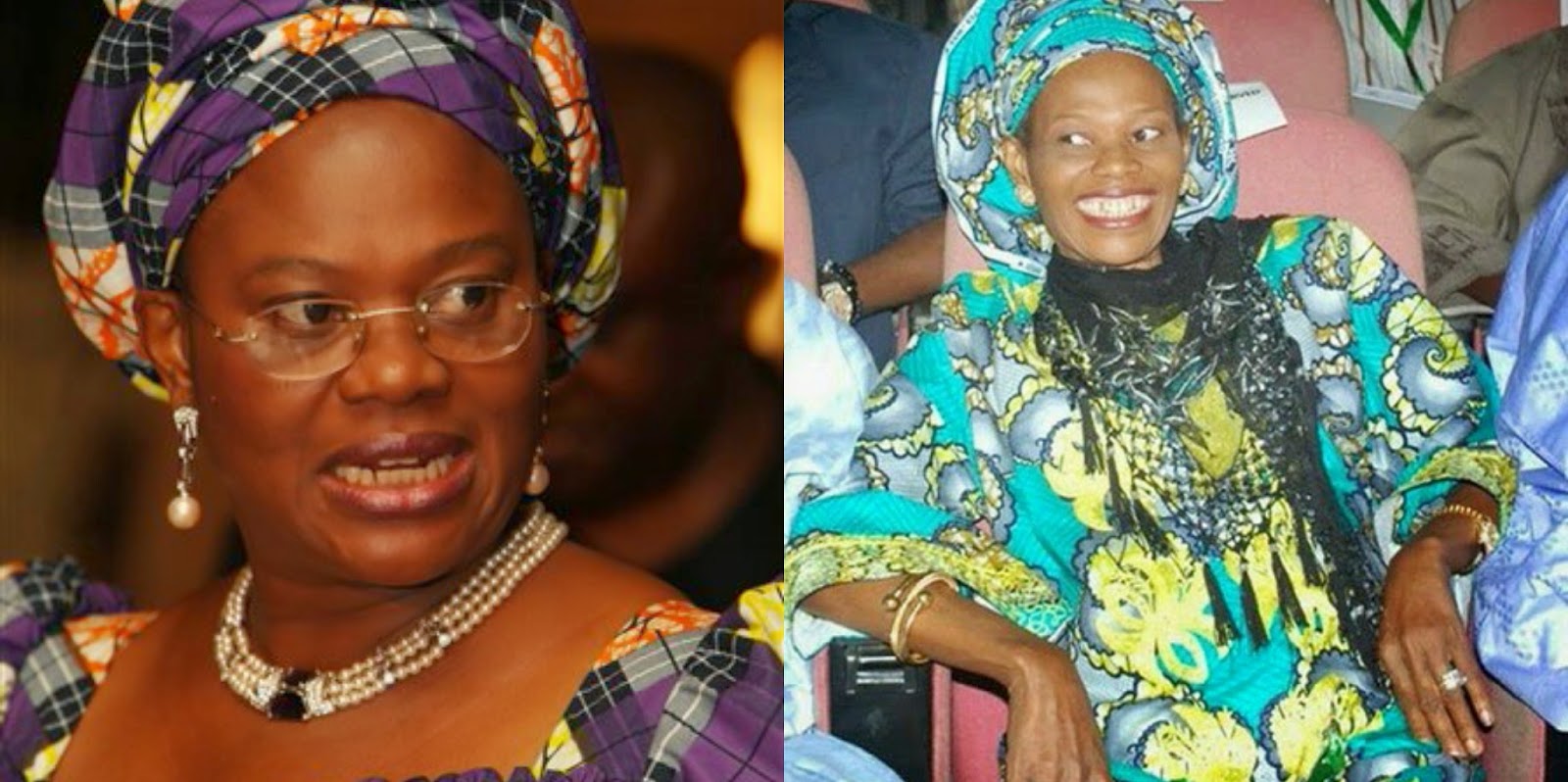 Nigeria’s Former Director General of the National Agency for Food and Drug Administration and Control (NAFDAC) and ex minister of Information, Professor Dora Akunyili, was reported to have died today by SaharaReporters “in an India Hospital where she has been receiving treatment for an undisclosed ailment”.
A source close to the family told Africa Thisday in a phone chat this morning to disregard such rumors as they are the “craft of desperate bloggers”. He continued: “Dora is loved by her people. If anything happens to her, the family will not hesitate to release an official statement to that effect. We are still praying that she recovers”.
Another source said to Africa Thisday, “when Maya Angelou, the American poet died, her family immediately announced her death on the social media. I believe the Akunyili family will do same if Dora is actually dead. Nigerians must learn to question what they read on blogs.
LATEST ON DORA AKUNYILI: DEAD OR ON LIFE SUPPORT?
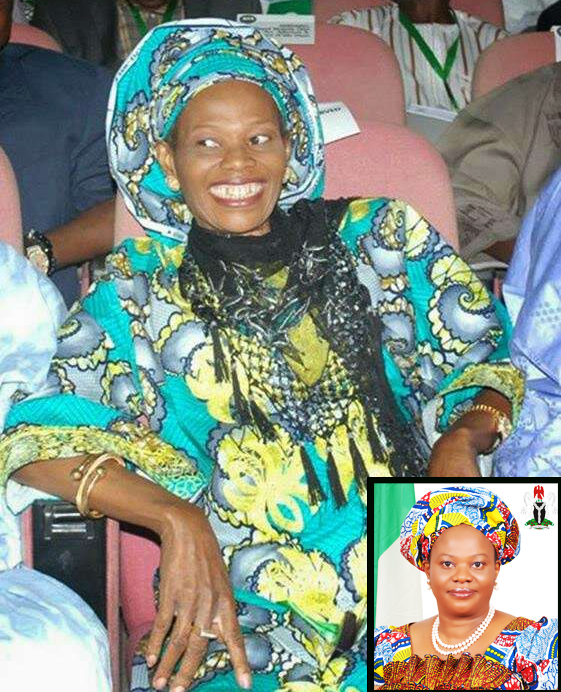 The secrecy surrounding the current medical condition of Professor Dora Akunyili, Nigeria’s former Minister for Information has sparked off flames of unconfirmed rumors on social media networks that Dr. Dora is dead as many users posted brief messages that read “RIP Dora Akunyili”.
Africa Thisday made efforts to reach the media assistant of the ailing former minister, Mr. Isaac Umunna and our several phone calls were not answered. However a source close to Mr. Peter Obi, the former governor of Anambra State who recently flew to India to visit Mrs. Dora told Africa Thisday in a phone chat that while rumors of the death of Mrs. Dora Akunyili may be unfounded yet “there are indications that Mrs. Dora is placed on life support”. Another source who is a political associate of Mrs. Dora advised the public to “keep praying for Mrs. Dora Akunyili as God can revive her.”
More details coming soon.
 AFRICA THISDAY